Loading
Digital Wellness
Your Brain in a Digital World
Technology can help us learn and connect. Make room for attention, restful nights and relationships—with small choices that fit your life.
What does my brain need right now?Optional and private. Your choices stay in this page’s memory, are not saved or sent to analytics, and clear when you leave or reload. This is education, not a diagnosis or a brain assessment.

01 / Digital Wellness
Explore the connections
Conceptual illustration—not an anatomical map. Attention, learning and sleep involve interacting brain systems, the body and our environment. Select a topic to explore.
01
Attention
Switching between tasks can require effort to reorient. Notifications can become cues to switch, even when the next task is brief.
Try giving one activity your attention, with optional alerts quieted.
Explore the evidence — APA · Multitasking: switching costs02 / Digital Wellness
What does my brain need right now?
Choose what feels closest. There is no score, right answer or required response.
Choose a concern to see a practical starting point.
03 / Digital Wellness
Make space for sleep
Build an example evening routine. Select habits to see how each could support winding down. This timeline is a planning aid, not a prediction of sleep quality or a medical prescription.
Earlier in the evening
Select a habit above to add it to your example routine.
During your wind-down
Select a habit above to add it to your example routine.
When you are ready for bed
Select a habit above to add it to your example routine.
A small boundary. A realistic beginning.
Pair a familiar moment with a manageable action. Try it, notice what works, and adjust. This is not a streak or an addiction test.
My practice plan
Choose a moment and a boundary to build your plan.
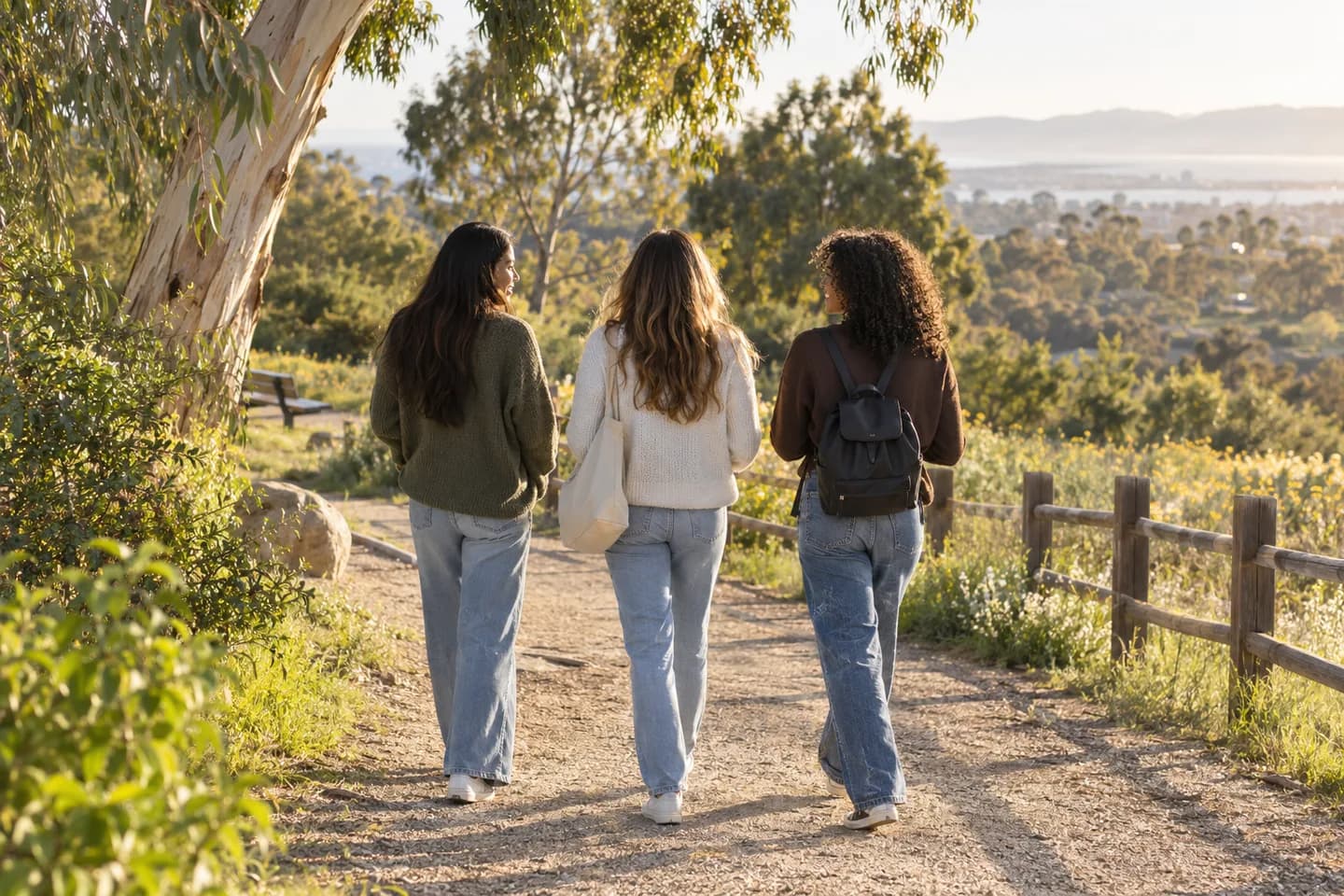
Connection beyond the feed
Online friendship can matter. An offline conversation, a shared walk or a school activity can add another kind of connection. Start with someone you feel safe around.
Find support →A toolkit for everyday digital life
Small adjustments, not perfection. Open a topic for a useful next step.
01Manage notifications
Keep alerts that serve you. Quiet optional promotions or social updates during an activity; leave essential contacts reachable.
Explore the evidence — APA · Multitasking: switching costs02Reduce task switching
Choose a single next step, close unrelated tabs and pick a natural stopping point to check messages.
Explore the evidence — APA · Multitasking: switching costs03Settle into the evening
Make time for a calming routine. Persistent sleep problems are worth discussing with a trusted adult or health professional.
Explore the evidence — NHLBI · Healthy sleep habits04Notice social comparison
A feed shows selected moments. Mute content that makes you feel worse and reconnect with your own interests.
Explore the evidence — APA · Social media use in adolescence05Respond to cyberbullying
You do not have to respond. Block or report abuse, keep evidence when safe, and ask a trusted adult for help. Do not redistribute harmful content.
Explore the evidence — StopBullying.gov · Report cyberbullying06Check online information
Look for the original source, author, date and supporting evidence. Compare with a trusted public-health source before sharing health claims.
Explore the evidence — NCCIH · Evaluating online resources07Build offline support
Try a shared meal, walk or activity with someone you trust. Use the Conversation Helper if starting a family conversation feels difficult.
Explore the evidence — APA · Social media use in adolescenceFind support →California’s Commitment to Digital Wellness
AB 2071 was signed in September 2026. It directs the California Department of Education to develop a plan to expand digital-wellness instruction by January 1, 2028. Cầu Nối explores related themes: mental health, thoughtful technology use and supportive relationships. This independent module is not state-endorsed or a mandated curriculum.
Sources & image credits
Nature and friendship images were generated with OpenAI for Cầu Nối, October 2026. People and places are illustrative, not documentary photographs. The conceptual diagram is original site artwork. No third-party stock imagery is used. Educational sources may open in English.